
There is a moment every parent recognizes: a child holds up a drawing, eyes wide, waiting. The picture might be three wild lines. It might be a sea turtle with a carefully patterned shell. Either way, the right answer is the same — because both are stages of one journey, and the journey is worth knowing.
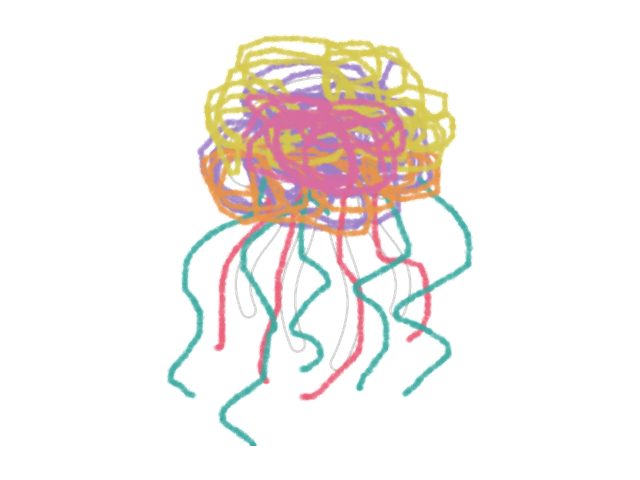
Stage one: the scribble years
Around ages two to three, coloring is not about the picture at all. It is about the arm. Big loops, hard presses, lines that shoot off the page — a toddler is discovering that their movements leave marks on the world. That discovery is enormous. The "mess" is motor development you can see.
What helps: big paper, chunky crayons, zero instructions. Asking "what is it?" too early can deflate a scribbler — try "tell me about this part" instead.
Stage two: shapes appear
Between roughly three and five, circles close. Lines meet on purpose. A blob gets two dots and suddenly it has eyes — and a name. Children at this stage start choosing colors deliberately, even if the logic is theirs alone. A purple turtle is not a mistake; it is a decision.
Every scribble is a stage, not a mistake.
Stage three: details arrive
Around five to seven, something changes in how children look at a template. They stop seeing "a turtle" and start seeing its parts: the eyes, the flippers, the plates of the shell. Coloring slows down. The tongue comes out in concentration. This is the stage where fine motor control, planning, and patience are all training at once.
Watch the shell specifically. First it gets one flat color. Weeks later, each plate gets its own. Later still, patterns appear inside the plates — spirals, stripes, tiny suns. The shell is a progress report written in crayon.
Here is what that looks like in practice — the same Pintsei turtle template, three very different artists:
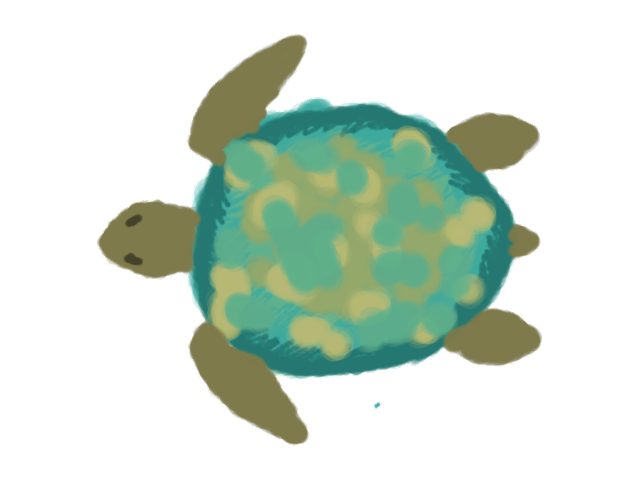
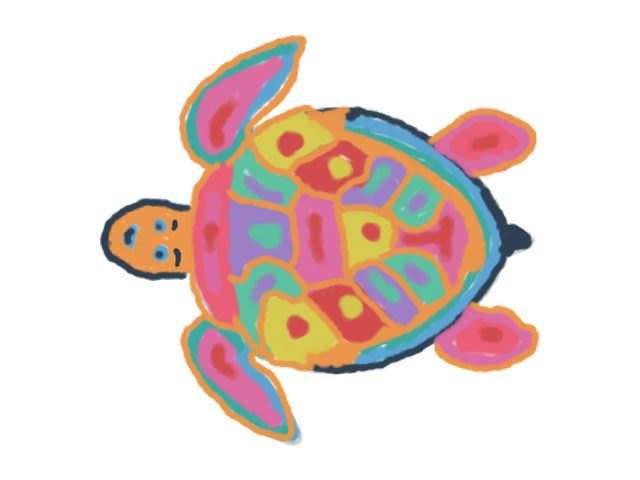
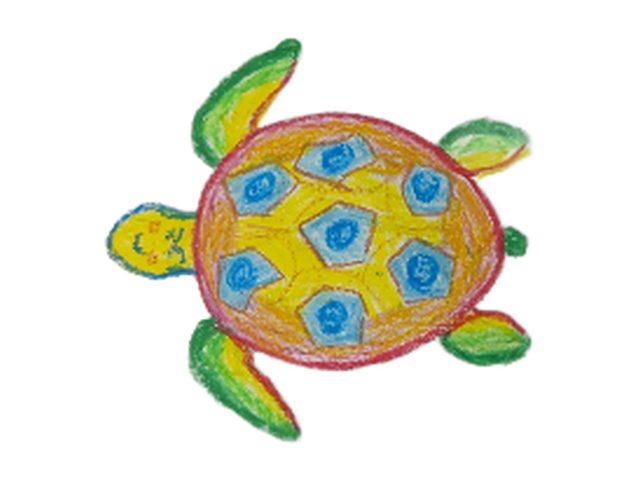
None of them is "better." They are different answers to the same question — and all three swim equally well.
Stage four: stories take over
From about seven, a colored creature is no longer a coloring — it is a character. The turtle has a name, a favorite reef, a rivalry with the shark. Children at this stage often color faster again, because the picture is just the beginning of the story they are telling.
Why coming alive changes the equation
Here is what we noticed watching children use Pintsei: the moment a coloring becomes a living creature, the stages stop being something to rush through. A scribbled turtle swims exactly as proudly as a masterpiece turtle. The reward is not "did I stay inside the lines?" — it is "that one is mine."
That matters, because shame is the fastest way to end a child's drawing habit, and pride is the fastest way to extend it. When every stage produces a swimming, breathing creature, every stage feels like success — and children who feel successful practice more.
How to watch the stages happen
- Keep the colorings. Date them. A folder of turtles from the same child, three months apart, is better than any development chart.
- Repeat the same template. Same turtle, new week — the differences jump out. (In Pintsei, your child can color the same creature template as many times as they like, on paper or on screen.)
- Narrate effort, not outcome. "You gave every shell plate its own color" lands deeper than "beautiful!"
- Let stages overlap. A seven-year-old having a scribble day is normal. Regression is rest.
The shell, finished
One day the turtle comes back with a shell so deliberate it stops you: patterned plates, chosen colors, maybe a tiny signature. You will remember the scribble years fondly then. Until that day — and after it — every version deserves the same reward: to slide off the page and swim.
And the journey does not end at the reef. The same stages play out on Sky City's planes and Cosmic Space's rockets — new worlds, same growing artist.