
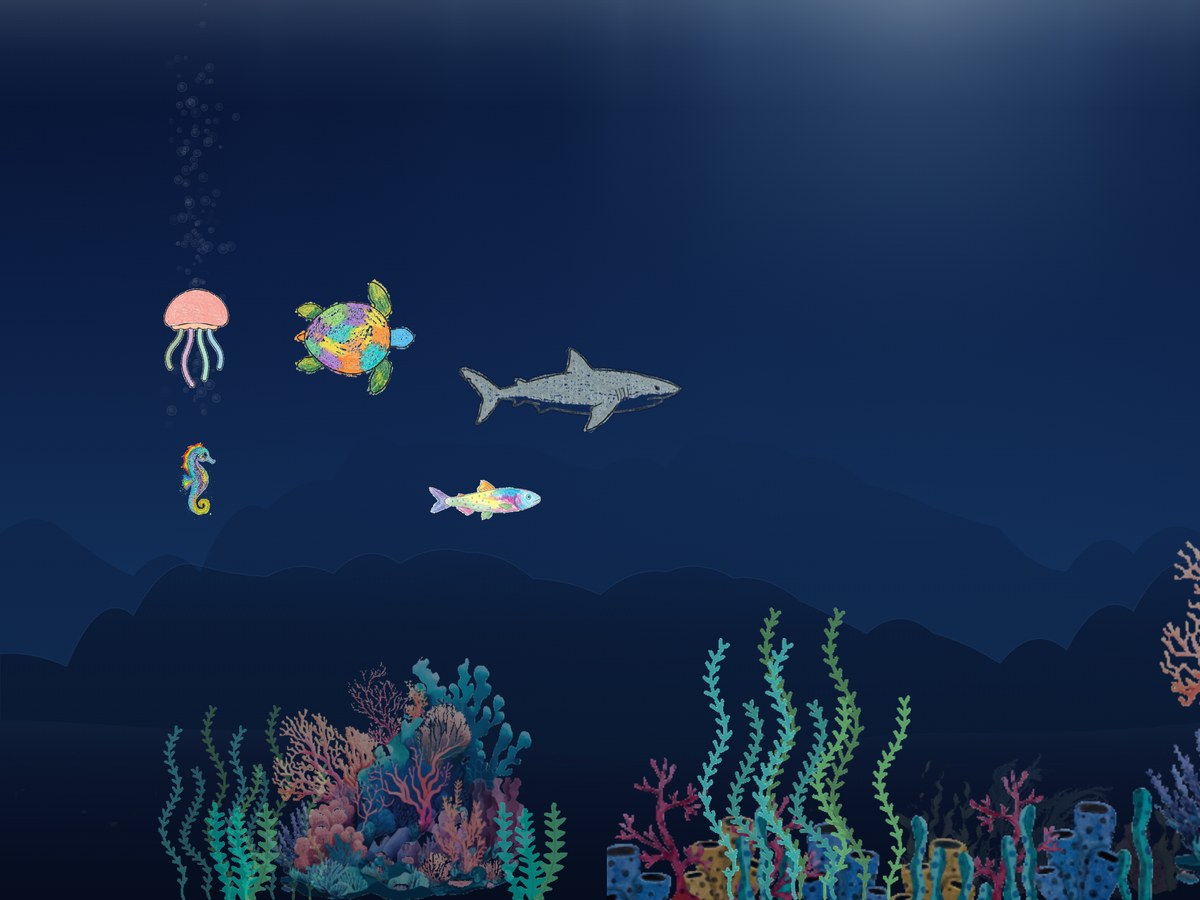
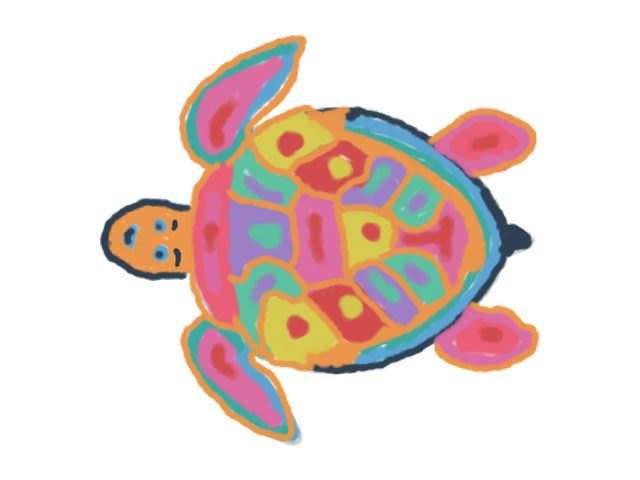
There's a specific half-second every parent should try to witness at least once. A child finishes coloring — a lopsided sea turtle, shell in three clashing colors — and then the turtle moves. It pushes off, glides past a stream of bubbles, and starts to swim. The child goes very still, and then: "I made that."
That half-second is the whole point of Pintsei. Not the coloring, not the animation — the join between them, where a flat drawing becomes a creature with somewhere to be. Here's why it lands so hard, and how to set it up at home.
Why "it moved" beats "it's pretty"
Praise for a finished drawing — "that's beautiful!" — is nice, but it's about the object. What lights kids up is agency: proof that their choices caused something in the world. Psychologists call it the sense of authorship, and it's one of the strongest drivers of intrinsic motivation in young children.
When the turtle they colored — their exact colors, their wobbly shell — starts swimming, the causal line is impossible to miss. My choices did that. It's the same reason a kid will press a light switch forty times: the delight isn't the light, it's the loop between action and effect. Pintsei just makes the effect a living creature instead of a bulb.
The creature doesn't get "fixed" or smoothed into a cartoon. It swims exactly as drawn — three-color shell and all. That fidelity is what makes it feel like theirs.
What's actually happening in their head
The magic moment quietly bundles several kinds of learning into one burst of joy:
- Cause and effect: "I colored, then it moved" is a clean, satisfying causal chain — the foundation of scientific thinking.
- Fine motor + focus: coloring inside a shape builds grip strength and sustained attention, and the reward at the end makes the effort feel worth it.
- Ownership of mistakes: a "messy" turtle still swims beautifully. Kids learn that imperfect is alive, not wrong — a small but real lesson in creative confidence.
- Curiosity hook: once the turtle is swimming, the natural next question is "who else is down there?" — and now they want to learn about the reef.
How to create the moment at home
You don't need special equipment — Pintsei runs in a browser on any tablet, phone, or laptop. The flow is built to reach the payoff in about three steps:
1. Let them pick
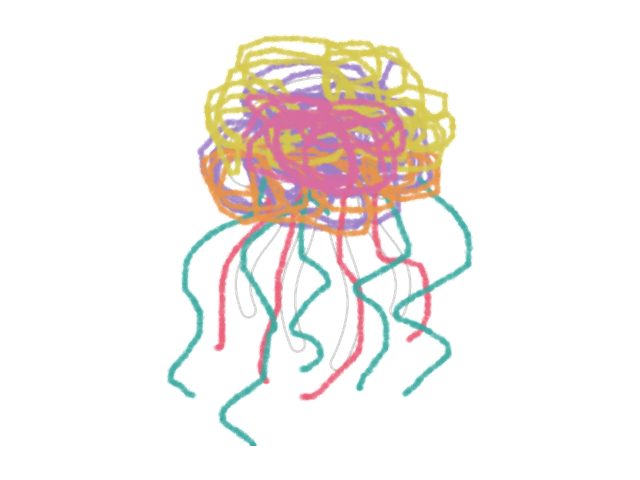
Open the Tropical Coral Reef and let your child choose their own creature — a Turtle, a Jellyfish, a Seahorse, a Shark, or a little Anchovy. Choice is where ownership starts. Resist steering.
2. Don't manage the coloring
Bold, messy, "wrong" colors are the good ones. A purple shark is a great shark. The point is that the colors are theirs, so the moving creature feels earned rather than assigned.
3. Watch it together — and hold the moment
When the creature drops into the reef and starts to swim, don't rush to the next thing. Let it swim for a bit. Name what you see: "Look, your turtle is gliding past the coral." The pause is what turns a neat feature into a memory.
Then keep the thread going
The magic moment is a doorway, not a destination. Once the reef is alive, curiosity is already open — so follow it. Ask where a sea turtle sleeps, why a jellyfish drifts instead of swims, what a shark eats. You've turned a coloring session into a nature conversation without ever making it feel like a lesson.
That's the quiet promise underneath the delight: screen time that leaves something behind. A drawing that moved, a question that opened, and a kid who's pretty sure they can make worlds.