
Every parent who has ever printed a coloring page has had this thought, usually about four seconds after handing it over: is this too easy for her? Or the other one, when the page comes back abandoned: that was too hard, wasn't it.
It is a fair question with a slightly wrong shape. Age is a blunt instrument here. The same five-year-old who spends forty minutes putting tiny rings on a seahorse on Saturday morning will, on Tuesday after nursery, want something she can finish in four minutes with one crayon. Neither of those is a skill level. They are moods, and both deserve a good page.
So here is the thing we actually use when we decide what to hand a child next. Forget age. Count the pieces.
Count the pieces
Every coloring page is really a set of separate areas waiting to be filled. A page with four big areas and a page with forty small ones ask completely different things of a child — different attention span, different grip, different amount of “am I nearly done?”. That count, not the birthday, is what makes a page feel right or wrong in a particular half-hour.
A few big pieces

Jellyfish. SkyCloud. Wide shapes, soft edges, and almost no way to get it wrong. This is the page for a first attempt, for a three-year-old, and — honestly — for a tired Tuesday evening at any age. Going fast is not a failure mode here; scribbling is the technique.
It also hides one of the best facts in the whole app. Jellyfish have no brain, no heart and no bones. They are about 95% water, and they have been drifting around the oceans for more than 500 million years, which is a long time before the first dinosaur.
A few clear parts
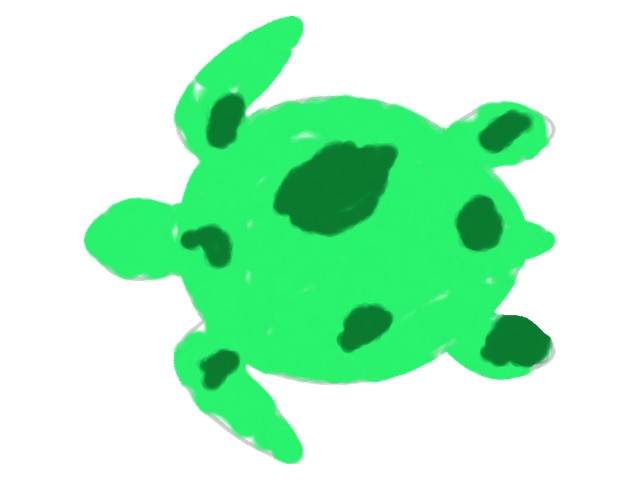
Turtle. Helicopter. UFO. A shell, a set of flippers, a head. A body, a cockpit, a rotor. The parts are separate enough that a child can finish one, feel the small satisfaction of a completed area, and move to the next. This is the stage where children start choosing a different color per part on purpose rather than by accident.
Helicopters are a good one to talk about while it happens: they can fly straight up, fly backward, and stop dead in mid-air — which is why they are the thing that comes for you on a mountain where no runway could ever fit.
Lots of small parts
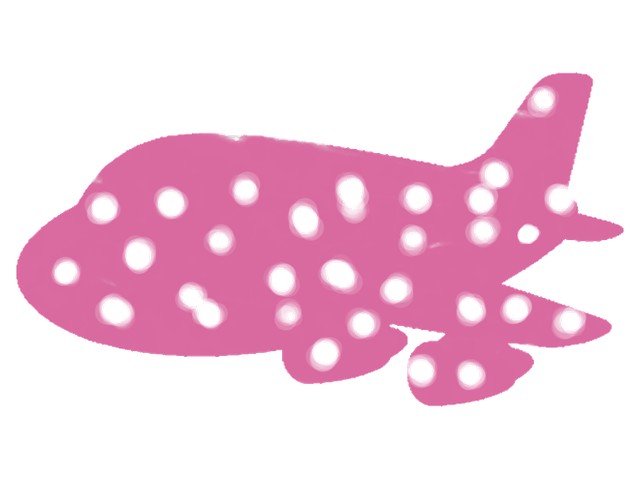
Airplane. Rocket. Windows, panels, fins, engines — the same small shape repeated along a line. There is a stage where this becomes genuinely absorbing, the way filling in a grid is absorbing, and a child who was “done with coloring” last month will sit down for twenty minutes with an airliner.
Worth saying out loud while they work: the very first airplane flight, in 1903, lasted twelve seconds. Shorter than it takes to color one window.
Pattern work
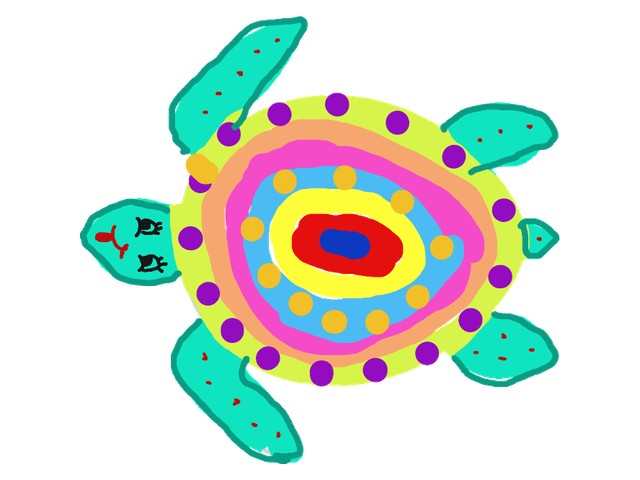
Seahorse. Shark. And, as those two turtles show, any earlier page revisited by an older child. This is where a colored-in shape turns into an animal: the rings along a seahorse's body, the scutes on a shell, a row of teeth. It is slow, it is deliberate, and it is the clearest visible marker that something has changed since last month.
The seahorse rewards the effort with the best fact we have: it is the dad seahorse who carries the babies. They are also the only fish that swim standing upright, and they can point each eye in a different direction at the same time.
The page with no right answer
Alien. Every other page has a correct answer lurking somewhere in a child's head — sharks are grey, turtles are green, planes are white. Somewhere around six, that knowledge starts turning into anxiety about doing it properly.
Nobody knows what an alien looks like. Purple skin, orange eyes, seven arms: all equally correct. If your child has started rubbing things out and starting again, this is the page to print. (Scientists genuinely think that if life exists elsewhere, it may look nothing like us — possibly more like a jellyfish.)
What actually changes as they grow
Not neatness. Neatness comes and goes with the day. What changes is intent — the moment a child stops filling a shape and starts making decisions about it.
You can usually watch it happen inside a single page, and it is nearly always the same beat: the eye. A shark is a flat blue shape right up until the eye goes in, and then it is an animal, and the child sits back slightly. Everything after that — the mouth, the fin markings, the little stripe along the belly — is a child who has decided this is a creature and is now looking after it.
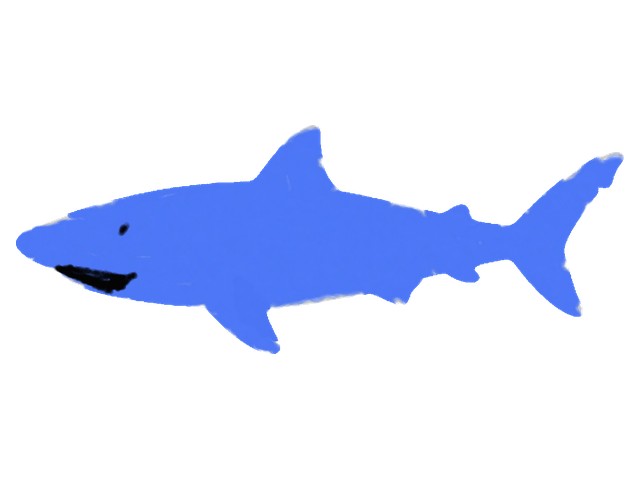
If you want one thing to watch for, it is not how tidy the coloring is. It is whether they add something nobody asked for.
Why every stage gets the same ending
Here is the part that matters more than the ladder. In Pintsei, the scribbled jellyfish and the carefully-ringed seahorse get exactly the same ending: the child presses SEI, and their drawing lifts off the page and starts moving in a real world — the jellyfish drifting through a coral reef, the airplane crossing a cloud-layered sky, the alien floating between stars.
There is no quality gate. Nothing gets rejected for being messy. A three-year-old's four-crayon jellyfish swims through the same reef as a seven-year-old's patterned turtle, and it swims just as well. That is deliberate, and it is the reason the ladder above is a suggestion rather than a rule: the reward does not get better as the coloring gets better, so nobody has to earn it.
Paper or screen — both work
Every creature can be colored directly on screen, or printed first. If you print, the page comes out as a big white panel with the outline sized to fill it, a hatched border around the edge marking the part that is not for coloring, and a small square marker in two of the corners. Your child colors it with real crayons at the table, no screen involved at all. When it is finished, you show the page to the app; it recognizes the sheet from the photo, lifts the drawing off the paper, and sets it loose in its world.
For the “few big pieces” end of the ladder we would print. There is something about a fat crayon and a big empty shape that a touchscreen does not reproduce. For pattern work, screen is often easier on small hands — you can zoom in.
Either way, the answer to is this too easy for her is usually: it is fine, she picked it, and it is going to swim off into a reef in about four minutes.